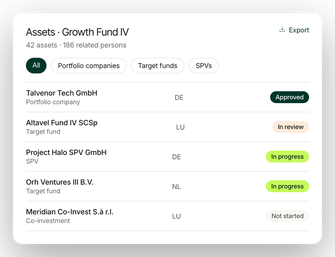
Know Your Asset
Get clarity on where your capital goes
Asset KYC for private funds: run compliant checks on every portfolio company, target fund and SPV before the deal closes, without delaying operations, adding headcount or manual spreadsheets.
Trusted by










Why Vestlane
KYC built for the deal side
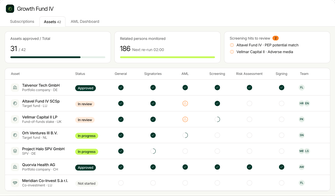
Save time, money and energy on asset and target onboarding, with an automated Know Your Asset (KYA) process and ongoing AML monitoring for as long as the business relationship lasts.
Close deals without compliance delays
You invest in opportunities you believe in, don’t let verification and compliance stall the momentum.
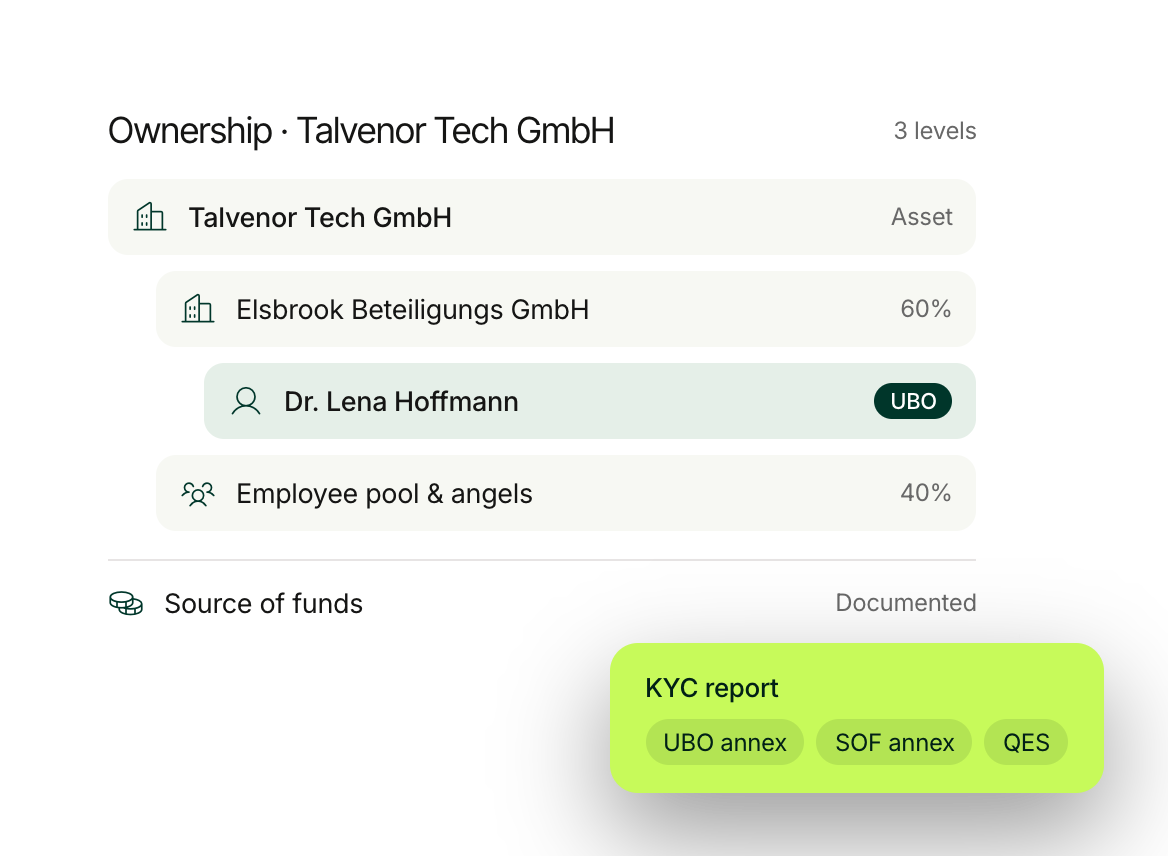
Know who’s behind every asset
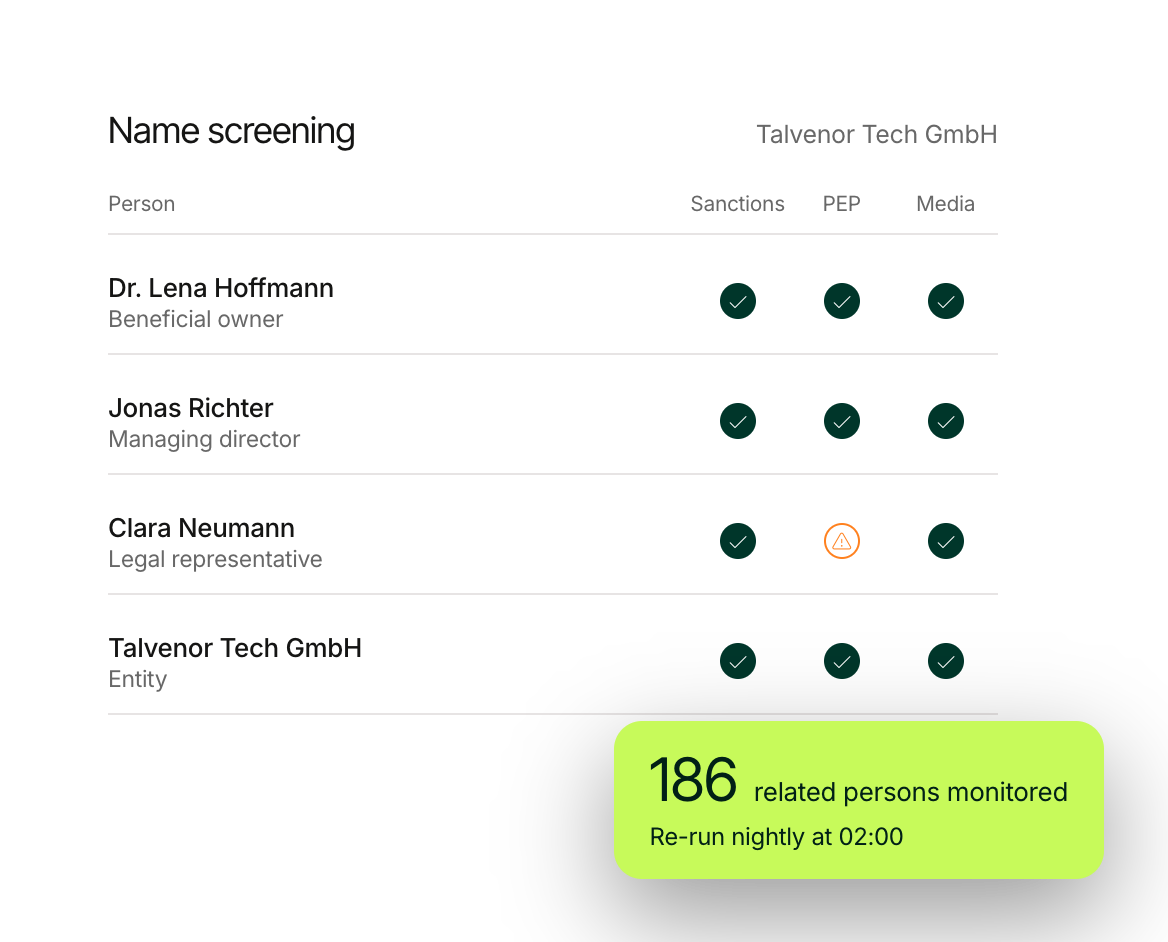
Beneficial owners, controlling persons and sanctions exposure, before you sign.
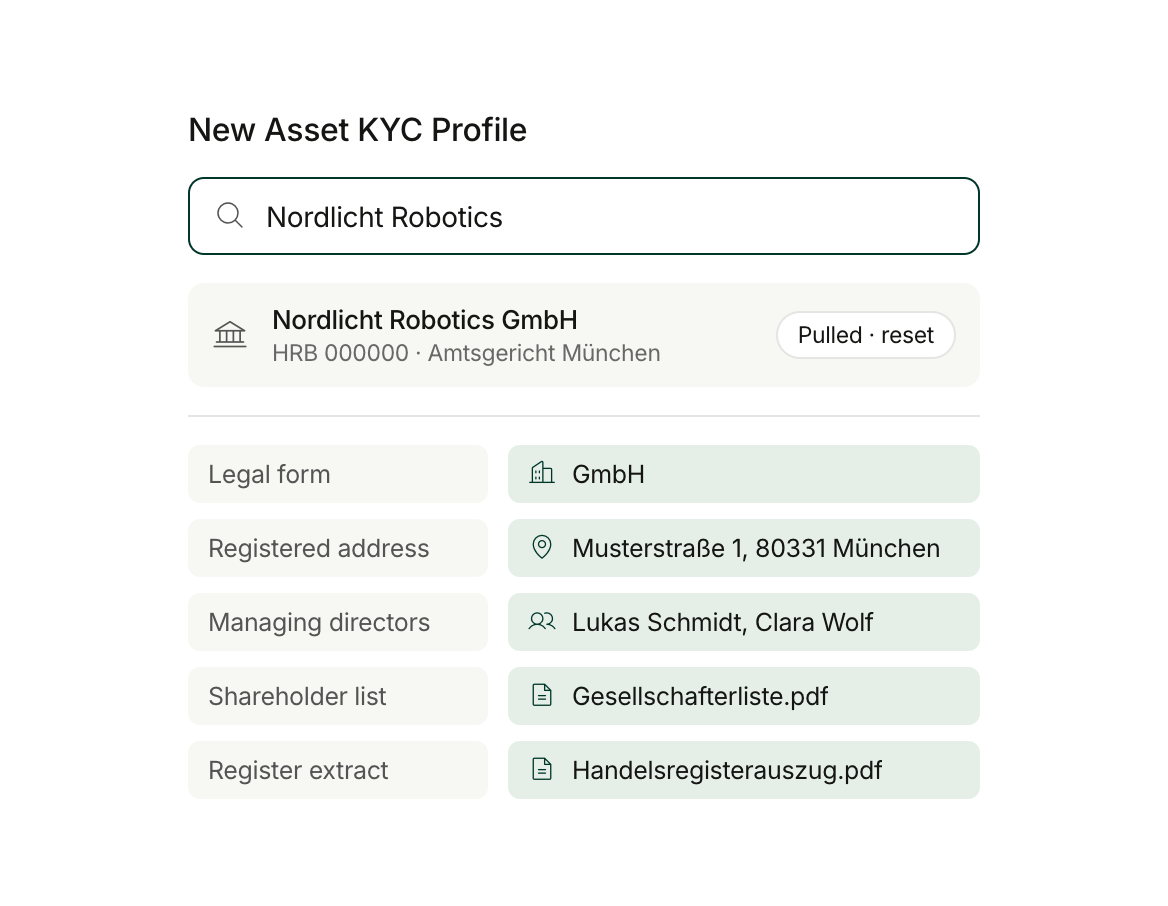
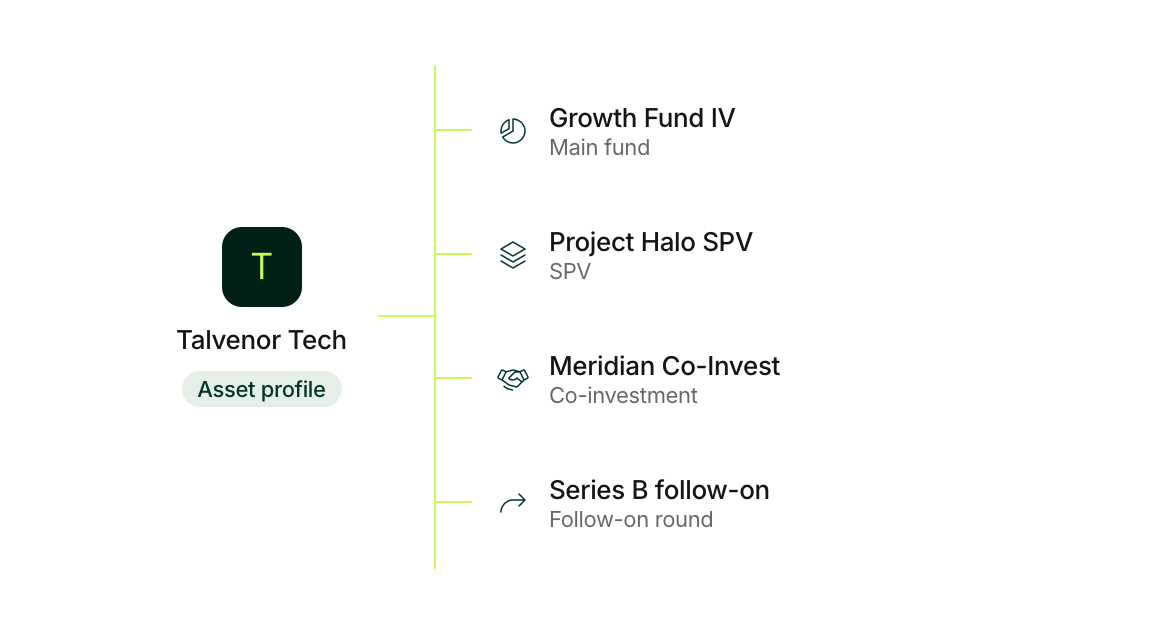
One asset profile for every vehicle
Follow-on rounds, SPVs and co-investments reuse the same file.
How it works
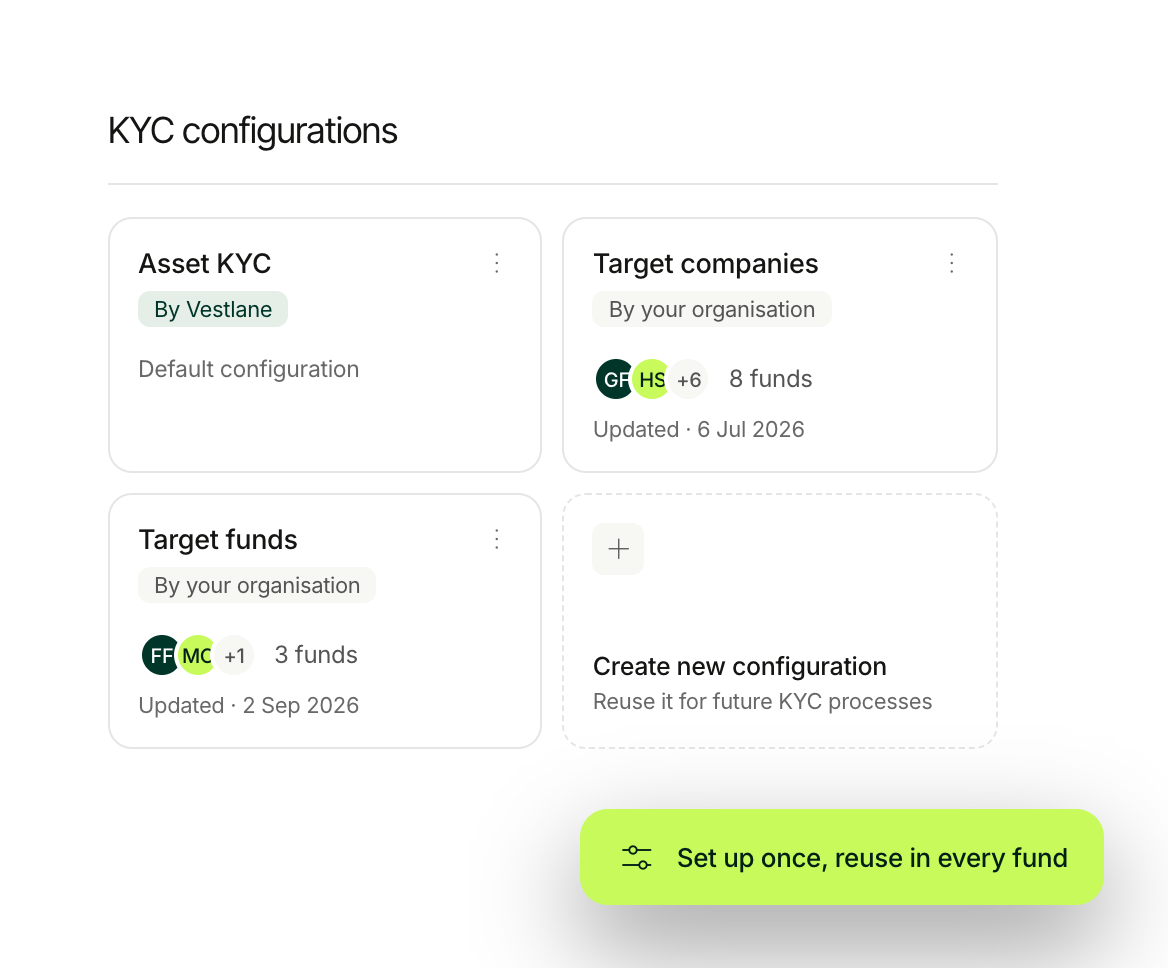
Reusable KYC configurations
Customise a KYC configuration once and reuse it across your funds and SPVs. Vehicles that invest in different assets get their own configuration, so every asset gets the checks its risk calls for.
- DORA readiness
- GDPR
- SOC 2 Type II
- Security
- €135bn+
- Clients' AUM
- 600+
- Funds & SPVs
- 12,000+
- LPs & Assets
Absolute security for your digital fund operations
Securely manage fund operations with Vestlane's registration and document submission processes. Our infrastructure is aligned with data protection laws and is DORA, GDPR, SOC certified.


SOC2 Certification
We're SOC2 certified.
Robust Encryption
Data and documents always encrypted in transit and at rest.
Frequent Backups
Documents are backed up daily, data even hourly.
Data Replication
Backups are replicated in multiple German data centers.
Frequently Asked Questions
What is asset KYC?
Asset KYC, also called Know Your Asset (KYA), is the due diligence a fund performs on the companies and vehicles it invests in, and on the parties around the deal. It covers identifying the asset and its beneficial owners, managers and legal representatives, screening them against sanctions, PEP and adverse media sources, and documenting the source of funds.
Is asset KYC a legal requirement?
It depends on the jurisdiction. In Luxembourg, CSSF Regulation 12-02 requires a documented ML/TF risk analysis of investments, reviewed when events require it. In the UK, the JMLSG guidance treats portfolio companies, sellers and co-investors as AML customers of a private equity fund. Everywhere, sanctions law prohibits making funds available to sanctioned persons, which applies to every investment.
Who needs to be checked in a deal?
Usually the portfolio company or target and its beneficial owners, managers and legal representatives, any new holding company set up for the deal, the sellers of the shares and, depending on your policy, co-investors. For fund-of-funds investments, the same checks apply to the target fund, plus its manager and general partner, including whether the manager is regulated.
When should asset KYC be done?
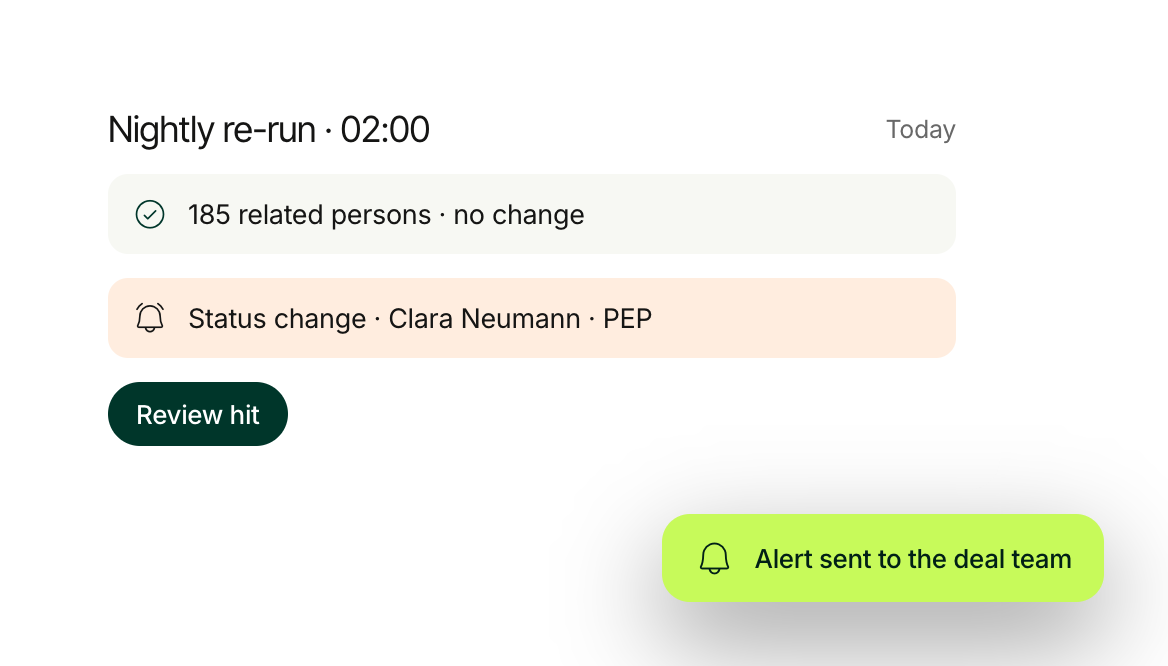
Before the fund is committed: once the investment is reasonably certain to go ahead, and before the fund is unconditionally bound to complete. After that, checks are repeated when something changes, for example a new shareholder, a transfer or a sale, and through ongoing screening for as long as you hold the asset.
How is asset KYC different from investment due diligence?
Investment due diligence looks at the commercial, financial and legal case for a deal. Asset KYC looks at money-laundering and sanctions risk: who owns and controls the asset, where the money comes from and where it goes. Both are needed, and they are often run by different teams.
Know every asset you invest in.
You invest in opportunities you believe in. Don’t let verification stall the deal.