
Ongoing Monitoring
Stay compliant, without manual overhead
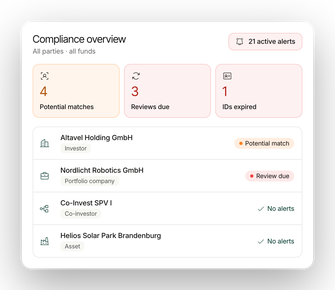
Ongoing monitoring for private funds: KYC reviews, expiring documents and risk changes for every investor and counterparty are flagged as they come up, so nothing lives in a spreadsheet.
Trusted by









What changes
Turn your compliance team from reactive to proactive
Stay on top of your ongoing KYC obligations: know about risk changes when they happen, update a profile or replace a document before it expires, with every step evidenced for your MLRO and auditors.
Act on new risks before they escalate
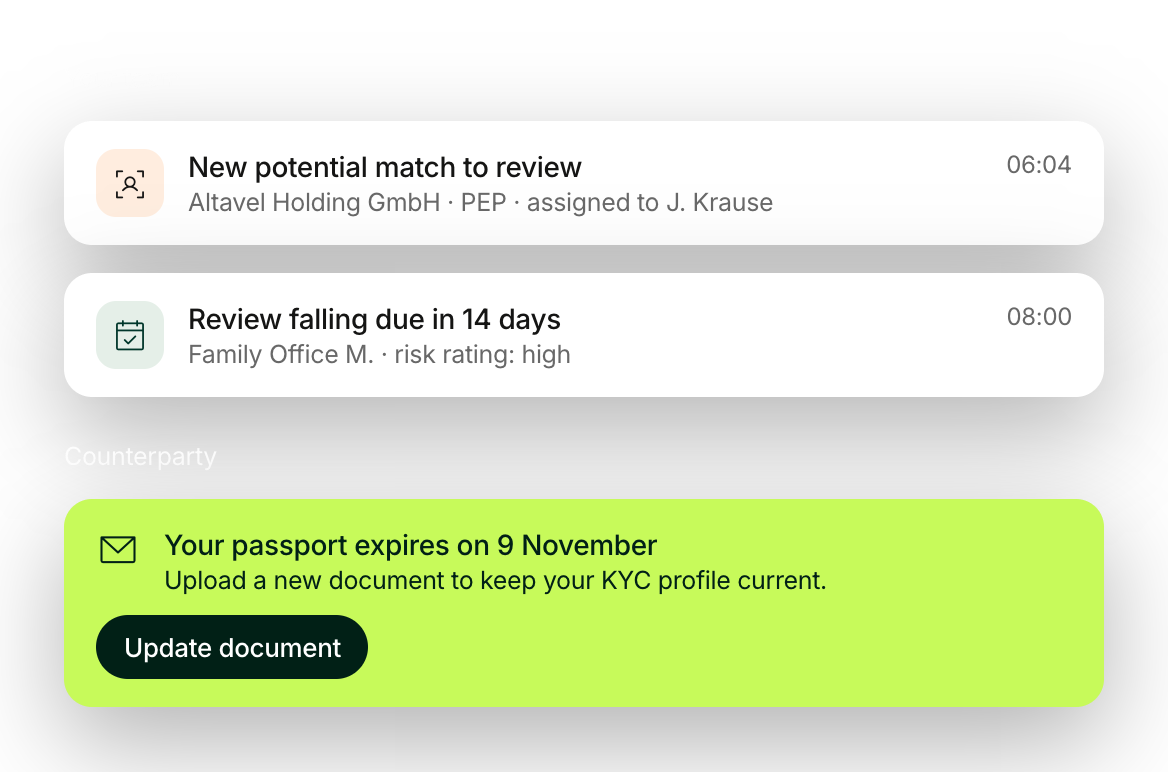
Every party is re-screened daily, so new sanctions, PEP or adverse media result reaches your team as it happens, not at the next review.
Shorter reviews, less chasing
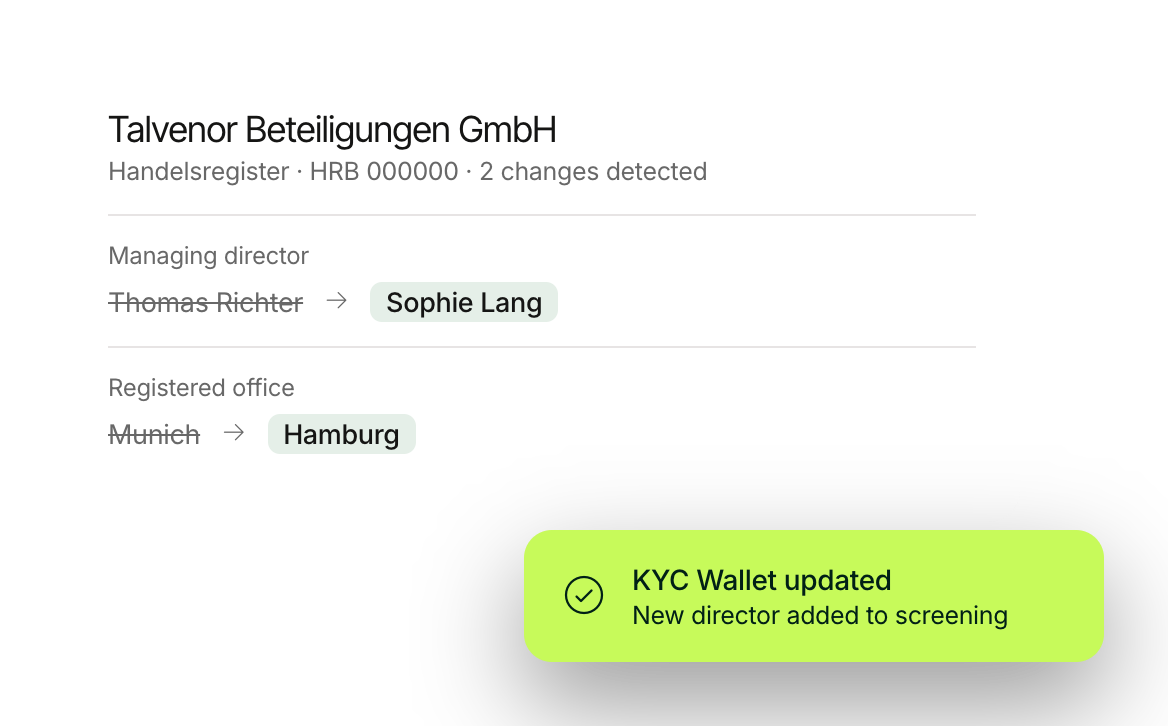
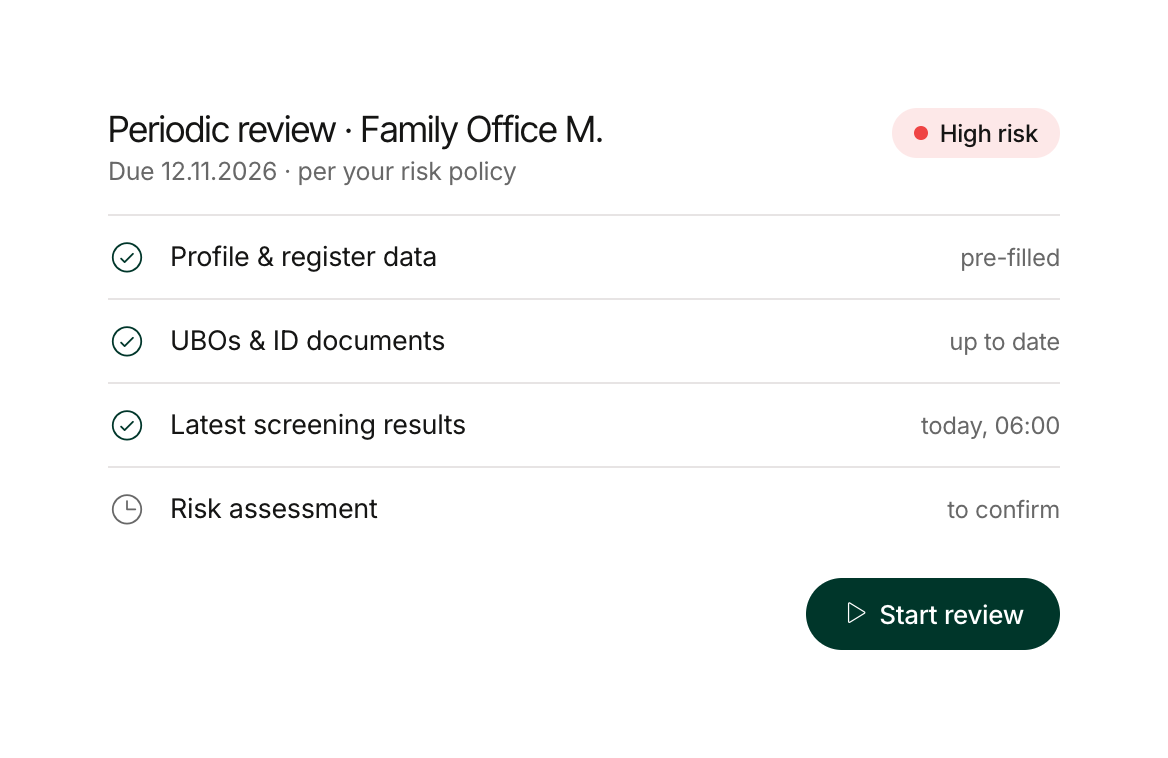
Counterparties keep their KYC wallet current between reviews, so a refresh is mostly confirming what is there, instead of starting from outdated records and chasing documents.
Audits without last-minute preparation
Every decision, document and action is already on record, so an auditor’s or regulator’s question is answered from one file, not rebuilt from emails.
How it works
Key features
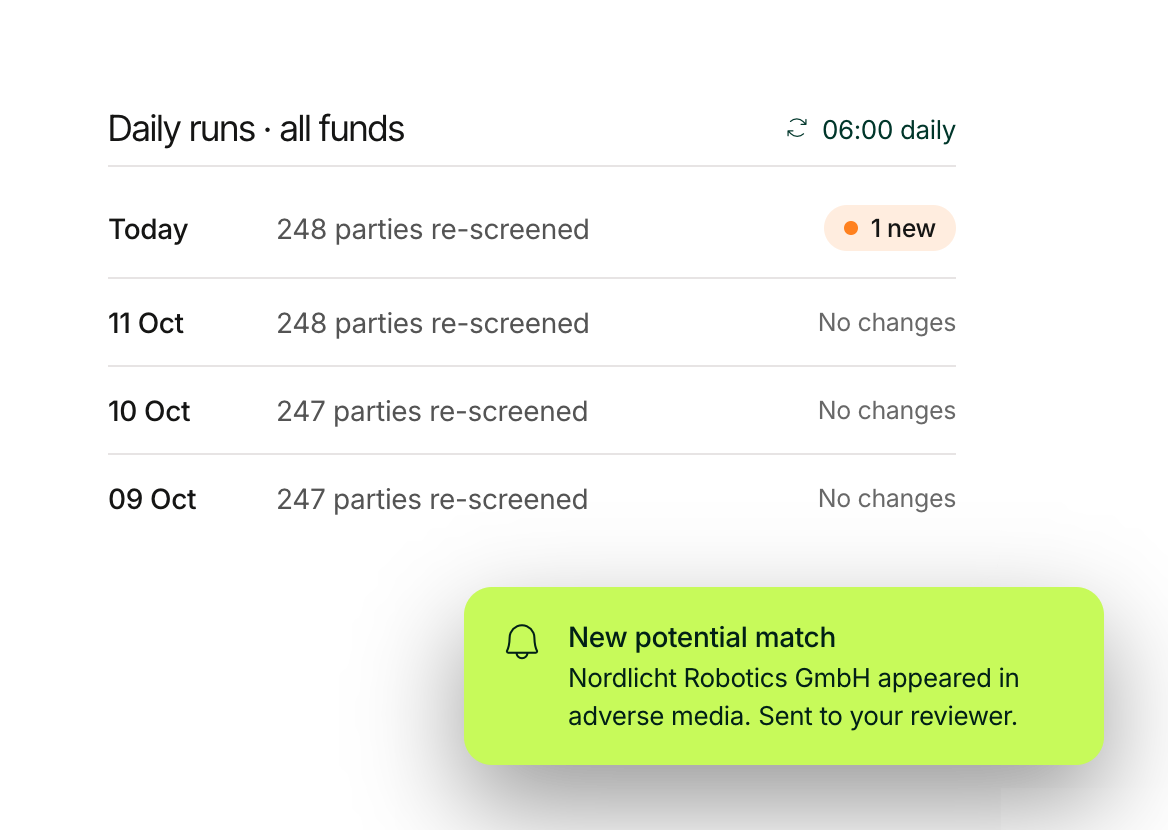
Daily re-screening of every party
Investors, portfolio companies, target funds and other counterparties, with their associated persons, are re-screened daily against sanctions, PEP and adverse media data.
- DORA readiness
- GDPR
- SOC 2 Type II
- Security
- 12,000+
- LPs & assets
- 600+
- Funds & SPVs


Vestlane's recognition in Germany allowed investors to reuse their data in various onboarding experiences, significantly enhancing operational efficiency.

Leonie Klimpke
Director of Finance and Compliance


I was amazed by Vestlane's subscription process. It transformed Capmont's old, paper-based methods into a seamless digital experience.

Fabian Langaard
COO at Capmont GmbH


A few clicks and it was done. Vestlane's subscription process transformed the old, paper-based, ink-signed methods into a seamless digital experience.

Vanessa Brahmi
Managing Director of Finance and Legal


We are very happy that we chose to do our current fund onboarding with Vestlane and are very much looking forward to further smooth fundraises with the tool!

Thomas Mayer
Director of Finance


Onboarding LPs has always been resource-intensive. With Vestlane, we've significantly reduced the time and effort involved, allowing us to focus more on high-potential venture funds.

Ertan Can
Founder at Multiple Capital
Everything you need to monitor
KYC Wallet
Profiles that stay current across fundsTransfers & Secondaries
KYC for buyers of an existing LP stakeRisk assessment
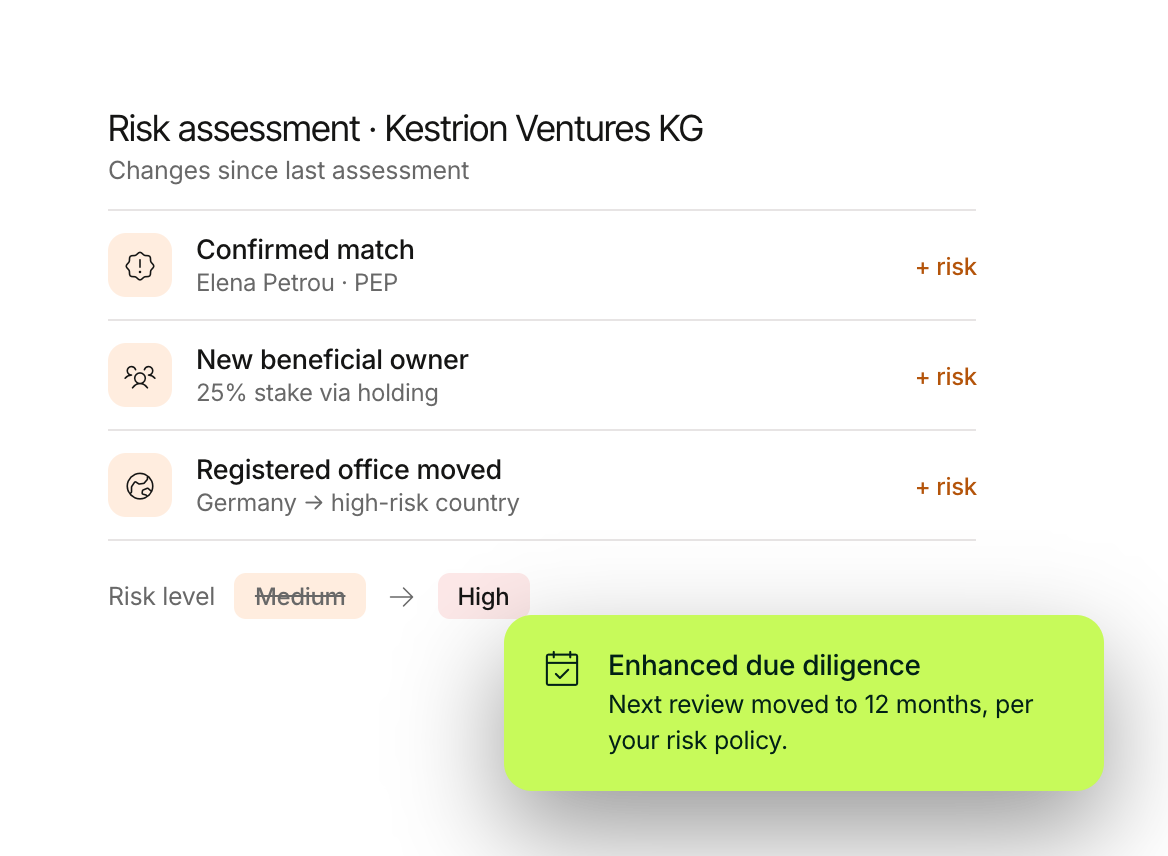
Ratings that follow each changeReporting & audit trail
Every action recorded and exportableScreening
How matches are reviewed and decidedAML Services
Our team reviews cases for you
Frequently Asked Questions
What is ongoing monitoring?
Ongoing monitoring is the part of AML due diligence that continues after onboarding. It means re-screening counterparties, reviewing their KYC file periodically according to their risk level, and keeping documents and information current for as long as the business relationship lasts.
How often does a KYC file need to be reviewed?
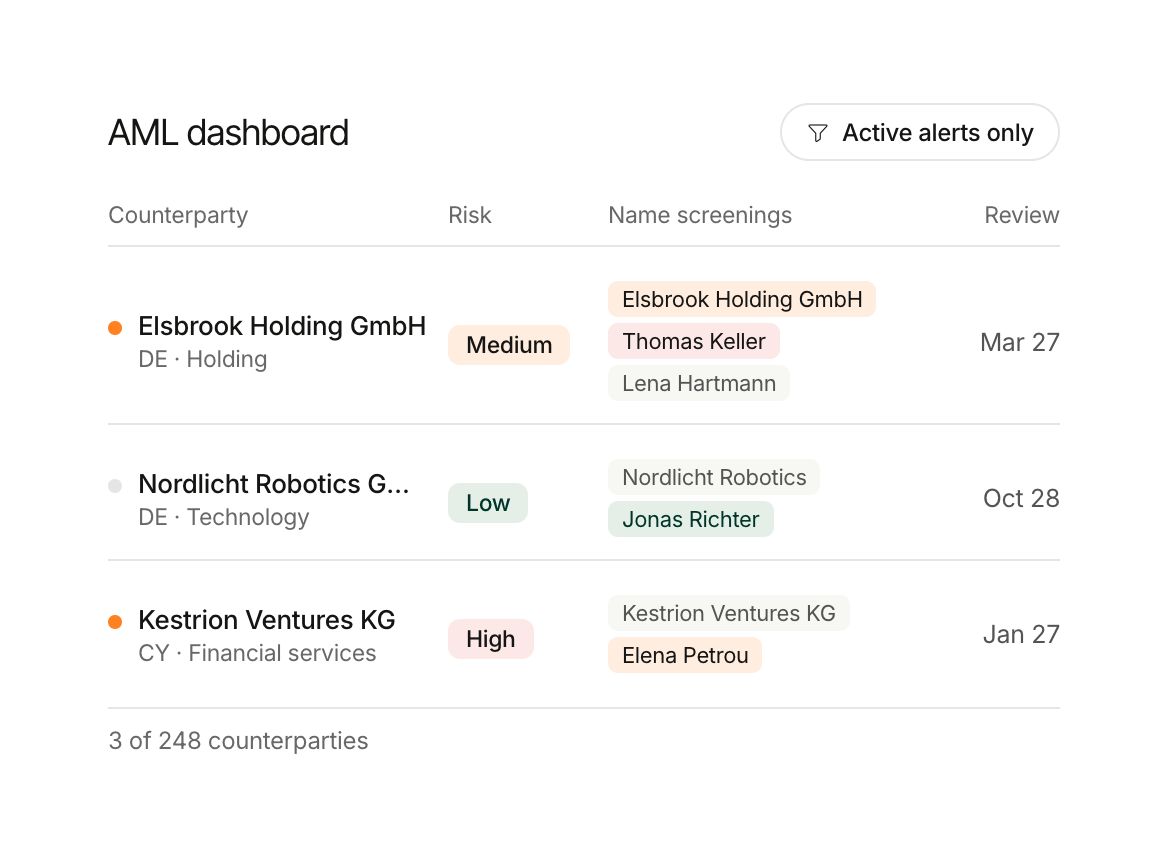
It depends on your risk-based policy. Higher-risk counterparties are usually reviewed more often than lower-risk ones. In Vestlane, you set the review period for each risk level, and the next review date follows from the date of the last risk assessment.
What can trigger a review besides the review date?
Besides the scheduled review date, a refresh can be needed when an ID document expires, when daily screening finds a new potential match, or when something changes for the counterparty, such as its ownership, address, economic activity, etc.
What happens when an ID document expires?
Before an ID document expires, your team and the counterparty are alerted. The counterparty uploads a new document to their profile, or your team requests it.
Who is alerted when a review is due or a document expires?
Both sides. Your team is alerted in Vestlane, and the investor or counterparty is asked to confirm or update their KYC profile. When they do, you see the update, and the next subscription or KYC with any fund starts from it.
What is the difference between ongoing monitoring and screening?
The Screening page explains how screening works: which lists are checked and how potential matches are reviewed and decided. Ongoing monitoring covers everything after onboarding: daily re-screening, periodic KYC reviews, expiring documents and the actions that keep each file current.
Make your compliance team proactive
Your team runs ongoing monitoring in Vestlane, on your policy’s rules. Need extra hands? Our AML Services team can help you monitor your files.


